
SEU Hosts Armenian Genocide Remembrance, Drawing 400+ Attendees
April 24, 2026
FLORHAM PARK, N.J. — Saint Elizabeth University welcomed more than 400 attendees on April 22 for An Evening of Remembrance: Honoring the Victims of the Armenian Genocide, a powerful program of reflection, education, and cultural expression held on its campus.
Organized by the University’s Center for Holocaust and Genocide Education and sponsored by The Dadourian Foundation, the event brought together students, faculty, and members of the wider community to commemorate the 1.5 million Armenians who were killed or displaced during the Armenian Genocide.
The evening featured a compelling discussion with acclaimed novelist Chris Bohjalian, hosted by Vartan Abdo of the Armenian Radio Hour of New Jersey. Attendees also experienced moving cultural performances by the Maldjian Family and the Zulal Trio, whose a cappella renditions of traditional Armenian folk music underscored the enduring strength of Armenian heritage.
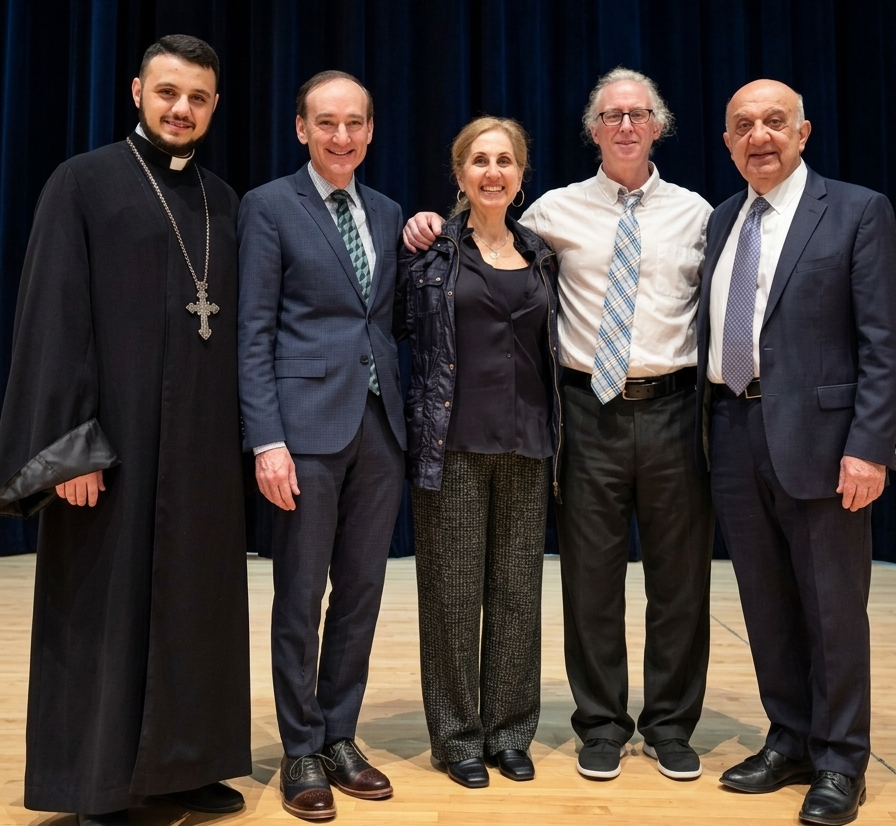
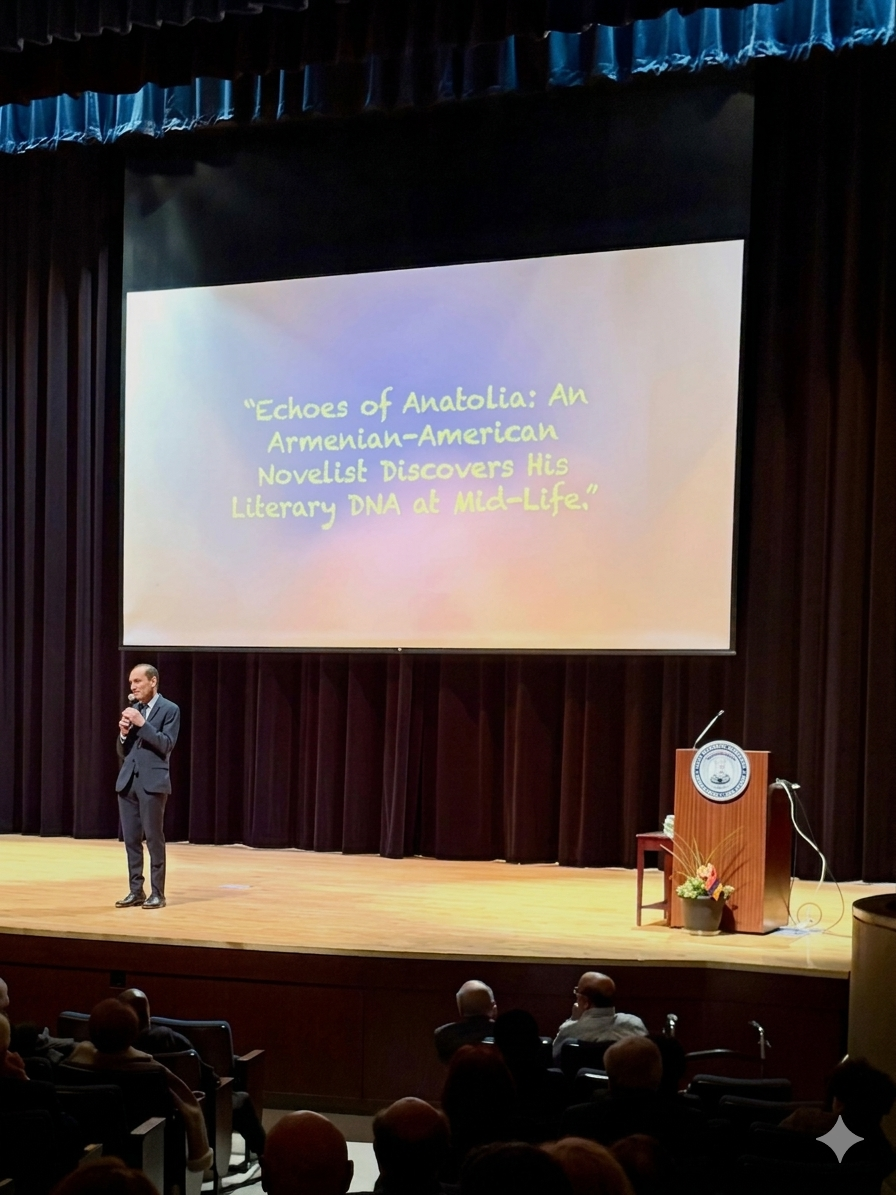
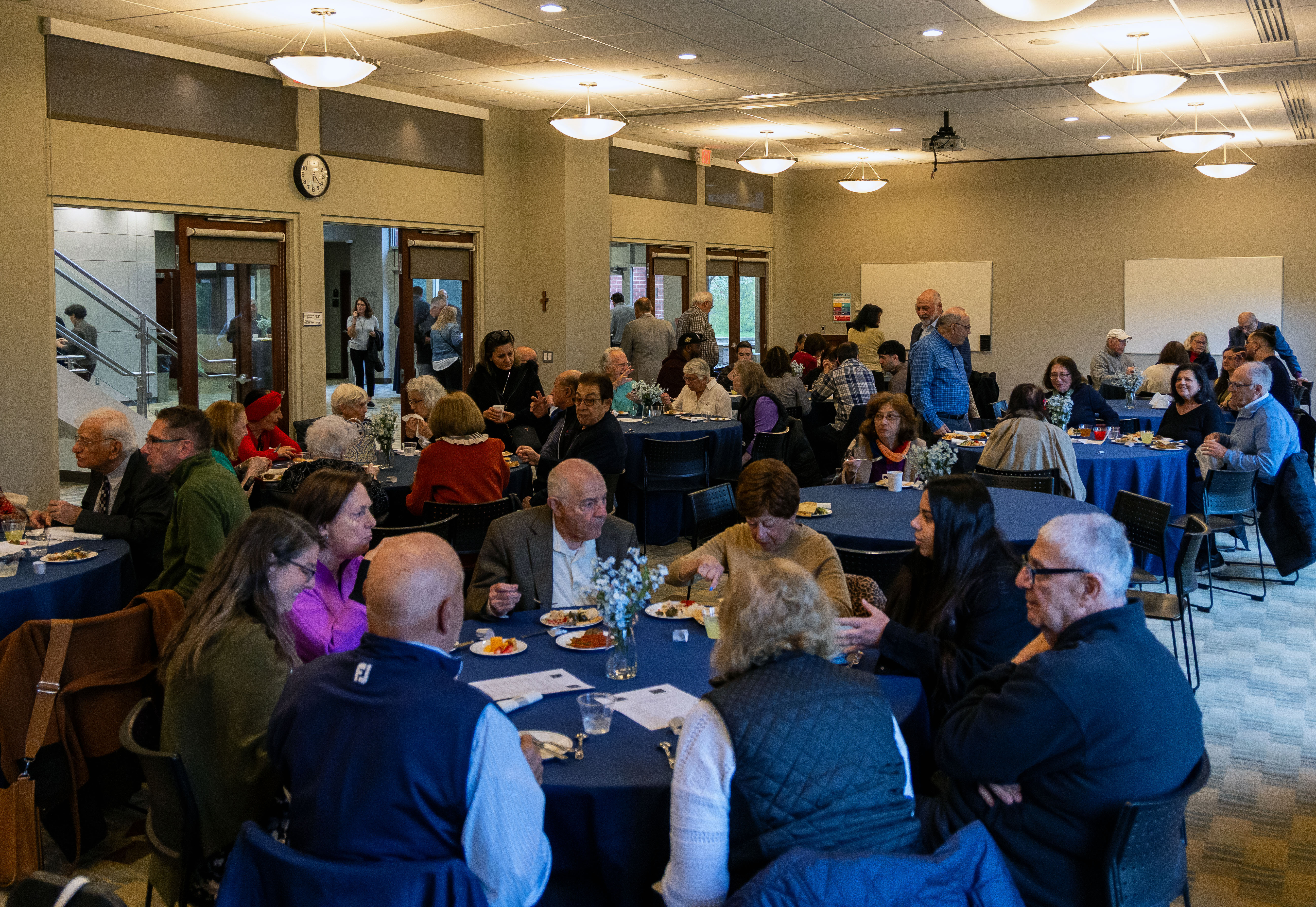
“I was deeply honored to speak about the Armenian Genocide, my family history, and my work at Saint Elizabeth University,” Bohjalian shared. “My thanks to the sponsors and the community for helping us remember both the tragedy and the resilience of the Armenian people. We are still the mountain.”
Dr. Rich Quinlan, Director of the Center for Holocaust and Genocide Education and Chairperson of the History Department, emphasized the importance of remembrance and education in his remarks.
“Saint Elizabeth University is committed to education, remembrance, and the responsibility to bear witness to history,” Quinlan said. “By bringing together scholarship, storytelling, and cultural expression, we create space not only to honor those who were lost, but to deepen understanding and ensure that these histories continue to be taught and remembered.”
The event reflected Saint Elizabeth University’s ongoing commitment to fostering dialogue, preserving historical memory, and engaging the community in meaningful conversations about justice, humanity, and resilience.