
Center For Holocaust And Genocide Education
Contact Information
Center for Holocaust and Genocide Education
Richard Quinlan, Director
Annunciation Center - Main Floor
Phone: (973) 290-4351
holocaustcenter@steu.edu
Support Our Mission
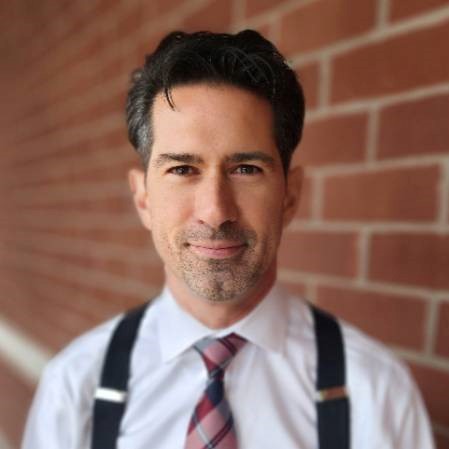
Constitution Day with Dr. Steve Hertler
Thursday, September 17th
11:30-12:30 Rainis Hall
Mahoney Library Building
Dr. Hertler earned a B.S. in Psychology from the State University of New York and
a Psy.D. in Clinical Psychology from Pace University.
In the capacity of an examining psychologist, Dr. Hertler worked at Newark Beth Israel
Medical Center for three grant-funded programs, while also providing assessments for
Morristown Memorial Hospital, East Newark Schools and Specialized Therapy Associates.
Dr. Hertler has authored texts including The Evolution of Political Ideology: A Natural
and Civil History and Life History Evolution: A Biological Meta-Theory for the Social
Sciences
Topic: Constitutional Balance
When hearing of a balanced constitution, one thinks of checks and balances wherein three branches of government are relegated to respective spheres of power, but restrained by the other two: Congress passes laws, but is subject to executive veto and judicial review; presidents execute laws, but are subject to congressional impeachment and judicial nullification; justices interpret laws, but are subject to executive appointment and congressional impeachment. Important as this form of balance is, the constitution is balanced in three other critical ways: It is balanced along gradients of despotism and democracy, conservatism and liberalism, as well as of elitism and egalitarianism. The first form of balance, again, that of checks and balances, is appreciated when examining the constitution as a legal document, whereas these three forms of balance are only appreciated when examining the constitution as a biohistorical artifact. The constitution achieved balance because it was authored at a moment in time along biological, cultural, and historical progressions.
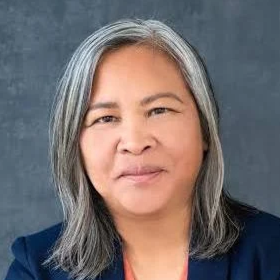 Putsata Reang discusses her work, Mama and Me: A Memoir
Wednesday, September 30th:7:30-8:30
Online ONLY
When Putsata Reang was eleven months old, her family fled war-torn Cambodia, spending twenty-three days on an overcrowded navy vessel before finding sanctuary at an American naval base in the Philippines. Holding what appeared to be a lifeless baby, Ma resisted the captain’s orders to throw her bundle overboard. Instead, on landing, Ma rushed her baby into the arms of American military nurses and doctors, who saved the child’s life. “I had hope, just a little, you were still alive,” Ma would tell Putsata in an oft-repeated story that became family legend.
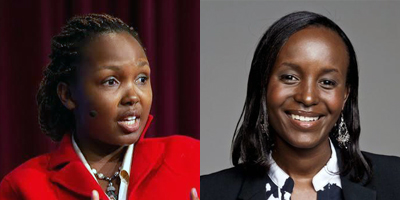 Providence Nkurunziza and Jacqueline Murekatete: The Rwandan Genocide and Contemporary
Hate
Providence Nkurunziza and Jacqueline Murekatete: The Rwandan Genocide and Contemporary
Hate
Tuesday, October 6th: 5:00-6:30
Rainis Auditorium
These two extraordinary women, both survivors of the Rwandan genocide, will discuss
their tales of survival and resilience, along with the state of Rwanda today, and
how genocide survivors can help combat antisemitism.
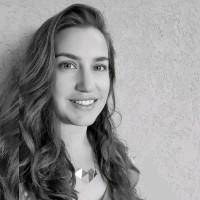 Adi Rabinowitz, Holocaust Scholar and Educator
Tuesday, October 13th 11:30-12:30
Online ONLY
Adi Rabinowitz will discuss her work as an educator and tour guide in Israel, working with people of all ages and backgrounds to remember the tragedy of October 7th, 2023.
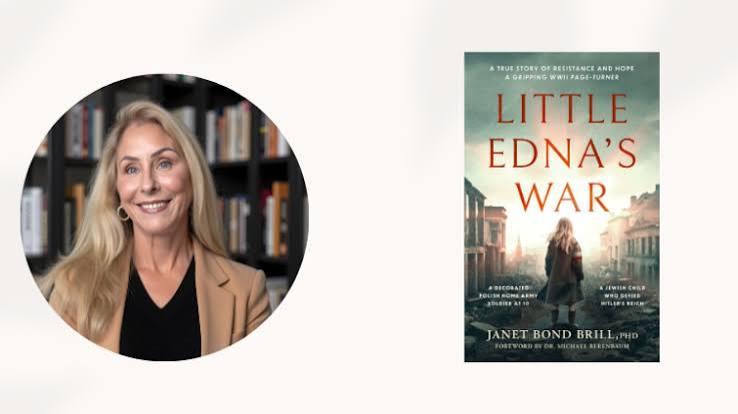 Dr. Janet Bond Brill
Thursday, October 15th 6:30-7:30
Rainis Auditorium
Dr. Bond Brill will discuss her work, Little Edna’s War.
At just seven years old, Edna Szurek risked everything to smuggle food through holes
in the Warsaw Ghetto wall, knowing each step could be her last. By the age of 10,
she was the youngest decorated member of the Polish resistance. And by the end of
the war, she had defied every Nazi plan for her destruction.
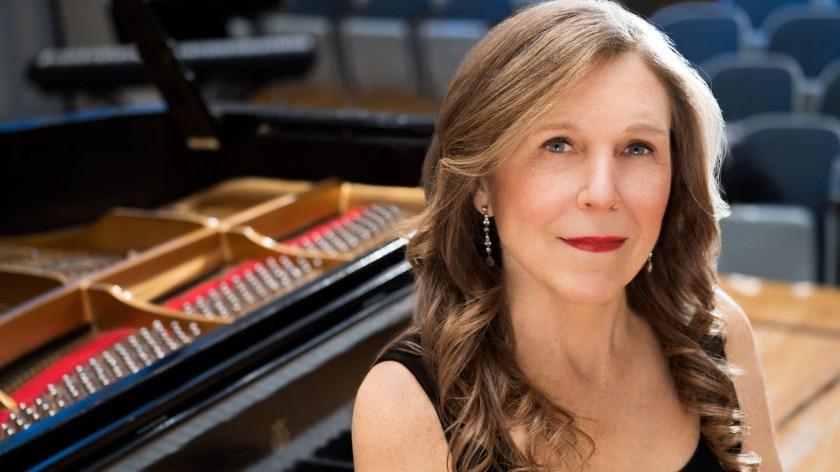 Kristallnacht: An Evening of Reflection and Remembrance with Carolyn Enger performing
The Mischlinge Exposé
Kristallnacht: An Evening of Reflection and Remembrance with Carolyn Enger performing
The Mischlinge Exposé
Tuesday November 10th 6:30-8:00
Annunciation Center
Dolan Hall
The Mischlinge Exposé is the first multi-media production conceived, created and directed by Carolyn Enger. Using source materials of her godmother’s testimony from the Shoah Foundation and her father’s family documents and testimony, both labeled Mischling, Grade A by the Nazis, combined with the music of composers from the salon period who converted to Christianity in the decades before the war and works reacting to questions of identity following the war; The Mischlinge Exposé vividly illustrates what it was like to be between worlds in Germany in the first half of the 20th century. Through the telling of her family story, Ms. Enger’s concert and live documentary directly addresses universally significant issues of generational trauma, identity and inclusion, encouraging empathy, tolerance, and engagement.
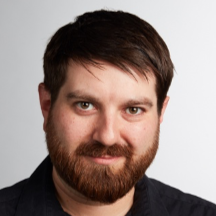 Evan Kleinman: We Are Still Here, documentary and Q&A with the director
Wednesday, November 18th 11:30-1
Rainis Auditorium
Evan Kleinman will present and answer questions about his personal and deeply moving
documentary, We Are Still Here. Making a difficult journey to Poland, Evan, his sister,
and parents confront the horrors of the Holocaust. Through this, they discover the
power of resilience and the ability to say, We Are Still Here.
Please contact Dr. Rich Quinlan at rquinlan@steu.edu with any questions. Thank you.